Effects of measles vaccines in United States
Measles is a disease caused by a virus that lives in the nose and throat phlegm of an infected person and spreads easily through breathing, coughing, and sneezing.
When someone with measles coughs, sneezes, or talks, infected droplets spray into the air (where other people can breathe them in) or land on a surface (where they can make others sick) for several hours. If others breathe the contaminated air or touch the infected surface, then touch their eyes, noses, or mouths, they can become infected.
Especially, in states like South Carolina, even though it has a 93.4% of vaccine coverage, it remains one of the states that has the most number of cases from 2024-2026, which reached more than 1000 cases. This may be because of the inequality of the access to health resources in the society of South Carolina.
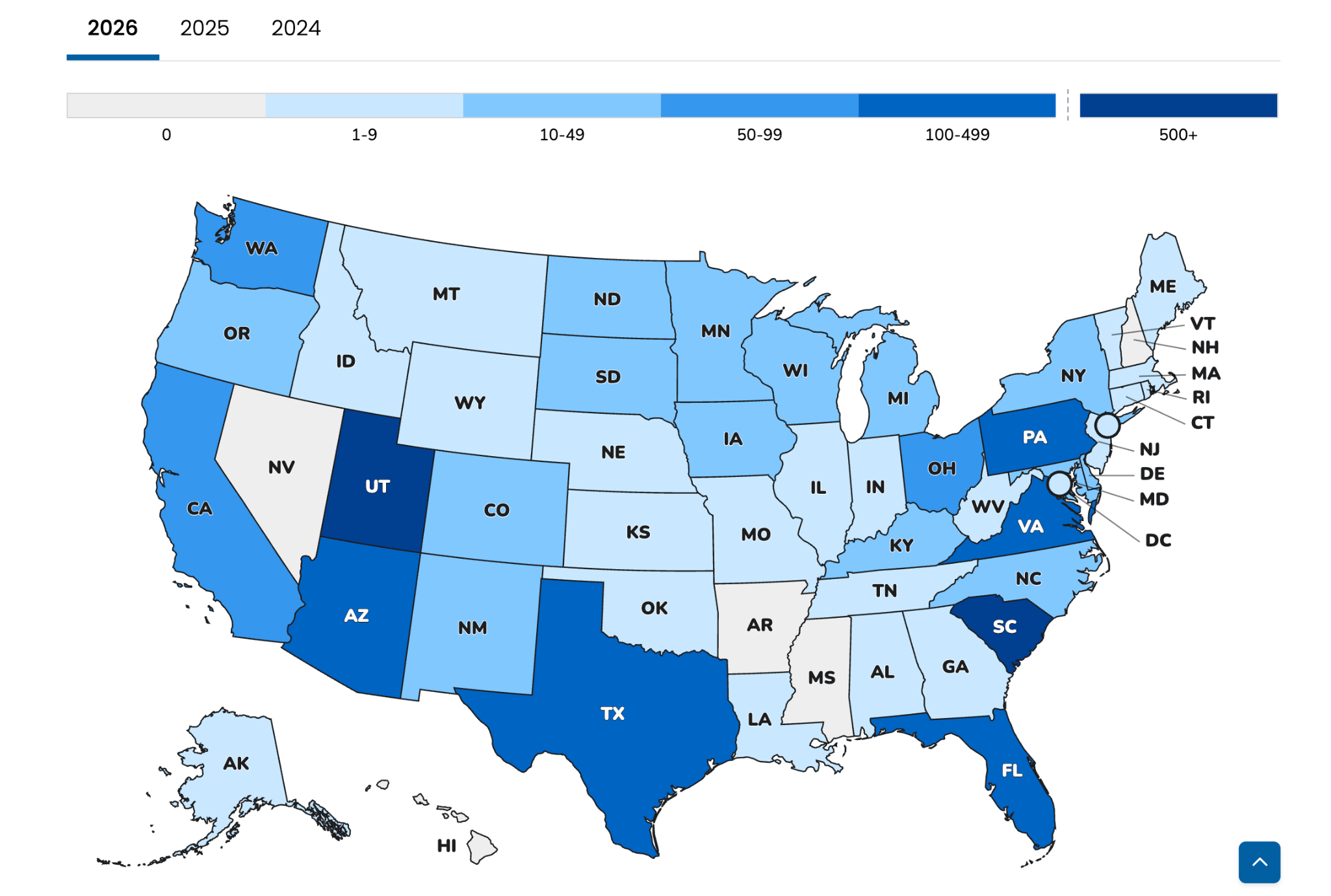
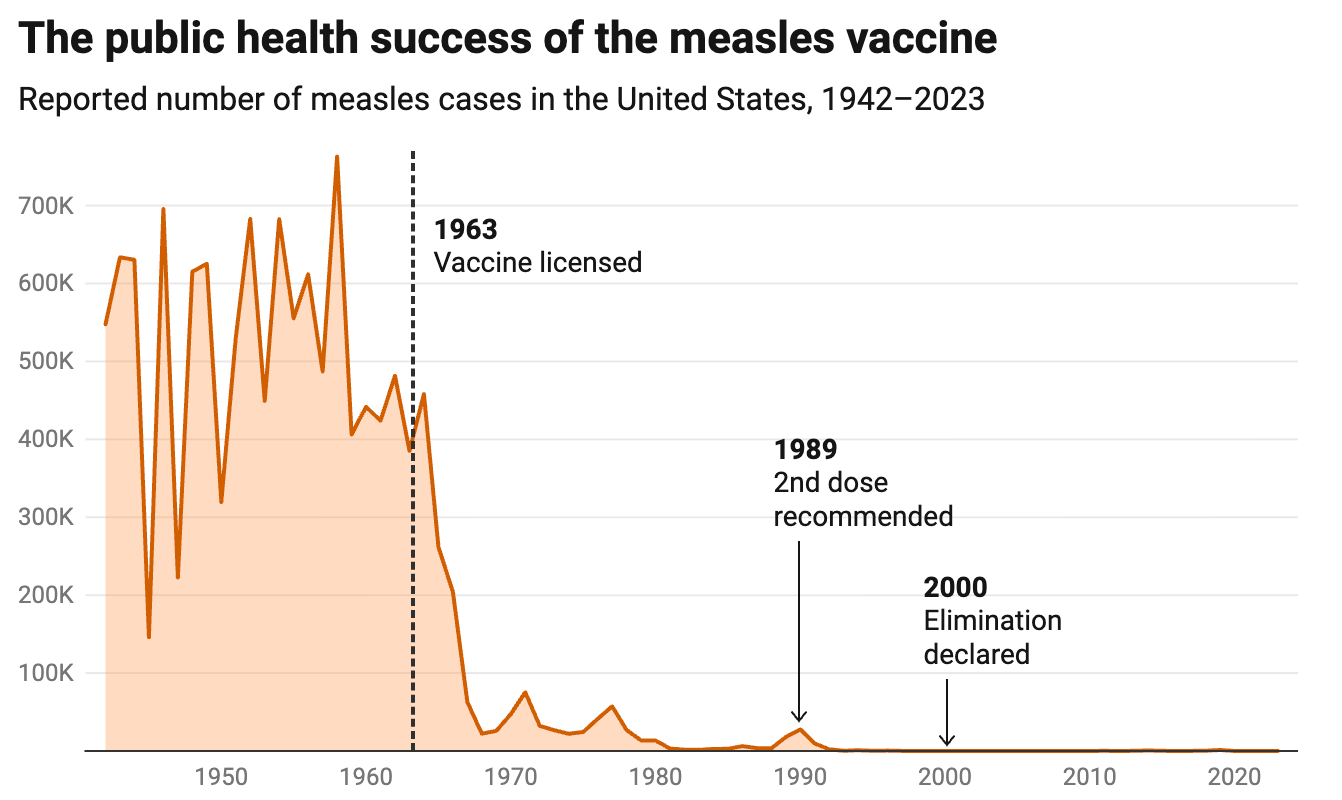
By analyzing the visualizations' features, the line charts are more suitable for showing the overall trend. The maps can be used to compare the results in specific areas.
What can we do to improve the situation?
- Apps: Which reports the cases of measles, collect the status of vaccination, also provides information about how to treat it when getting the measles.
- Educational campaign: To promote higher vaccination coverage.
- Charities: Help promote health equity and form more herd immunity in poorer communities to further achieve elimination of the disease.
Sources